The Human Touch Still Matters: AI as a Compliment, Not a Replacement
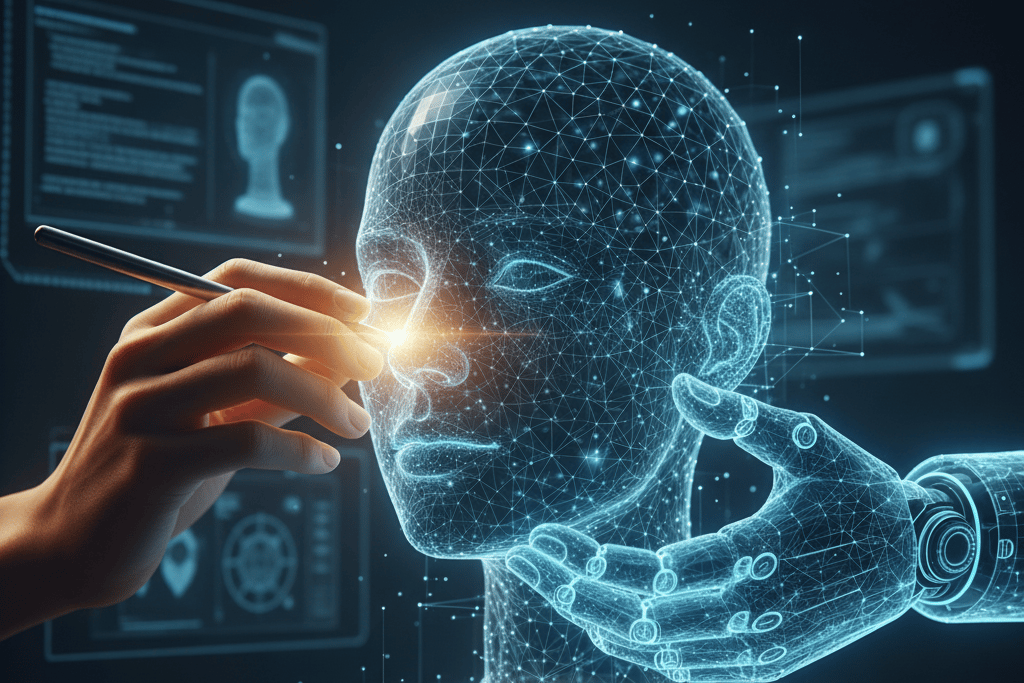
The Human Touch Still Matters: AI as a Complement, Not a Replacement
There's an undeniable buzz around artificial intelligence in the wellness space. Mental fitness professionals are hearing about AI-powered personalization, data analytics, automated reminders, and efficiency gains that seem almost too good to be true. And in many ways, they are genuinely useful. But amid the excitement, an important question emerges: In our rush to optimize and automate, are we risking the very thing that makes our work transformative?
The answer lies not in choosing between human connection and technology, but in understanding what each does best.
What AI Does Exceptionally Well
Let's be clear: AI has real strengths. It can process vast amounts of data to identify patterns a human might miss. It can deliver consistent reminders and support 24/7. It scales effortlessly, making mental fitness resources available to people who might not otherwise access them. It can personalize recommendations based on user behaviour, adapt to individual preferences, and do all this without fatigue or bias.
For practitioners, AI tools can handle administrative tasks, track client metrics over time, and even suggest insights based on aggregated data. This frees up mental and emotional energy that you can redirect toward what matters most: being present with your clients.
What AI Cannot Replicate
Here's what AI fundamentally cannot do: it cannot truly know your client. It cannot sit with someone in their vulnerability and meet them with authentic presence. It cannot intuit when silence is more powerful than words, or sense the exact moment a breakthrough is emerging. It cannot hold space with compassion that comes from human understanding of struggle and resilience.
Coaching, brain training, meditation facilitation, and positive psychology practice are relational arts. They work not just because of the techniques deployed, but because of the quality of attention, the mirroring of possibility, and the safe container that a skilled practitioner creates. A client doesn't just need information or optimization—they need to feel truly seen.
This is the irreducible core of what you bring.
Finding the Right Balance
The invitation, then, is to think strategically about where AI genuinely enhances your practice and where it might inadvertently dilute it.
AI can handle: Administrative workflows, data tracking, resource curation, personalized between-session support, accessibility barriers, and consistency in routine touchpoints.
You handle: Assessment and attunement, moment-to-moment responsiveness, complex emotional navigation, ethical discernment, creative problem-solving, and the transmission of hope that comes from human connection.
When you use AI to automate the logistical and repetitive elements of your practice, you're not replacing yourself - you're protecting the space where your real work happens. You're saying that your presence matters too much to dilute it with administrative busywork.
Practical Integration
Consider these approaches:
Use AI to send personalized practice reminders between sessions, but ensure your one-on-one time is fully present and device-free. Leverage data analytics to track progress, but interpret those insights through your intuition and knowledge of the client's full story. Recommend an AI-powered meditation app for daily practice, but use your sessions to explore what's arising and what resistance shows up.
The question to ask isn't "How can I automate this?" but rather "Will this free me to be more present and attuned with my clients?" If the answer is yes, it's probably a good use of technology.
The Bigger Picture
Mental fitness professionals are increasingly needed precisely because people are drowning in technology and starving for genuine human connection. Your role is becoming more valuable, not less. But only if you're intentional about protecting what makes your work irreplaceable: your humanity, your presence, and your capacity to witness and catalyze growth in others.
AI is a powerful tool in your toolkit. But it remains a tool. The real work - the transformation, the healing, the awakening - that happens between two humans who are genuinely meeting each other. That's where the magic lives. And that's where you remain absolutely essential.
Use AI to buy yourself more time for what only you can do.
If you’re a practitioner who wants to integrate AI wisely - in a way that enhances your humanity, not replaces it then feel free to browse our prompt packs.
Contact Prompt Practitioner
© 2025. All rights reserved.